WhatsApp SMS Fallback: Never Miss a Critical Message Again
A customer reaches the checkout. They request an OTP. Nothing arrives. They wait. Refresh. Try again. The OTP never comes through on WhatsApp.
They abandon the cart.
That's not a messaging problem. That's a revenue problem. And it happens more often than most businesses realise.
The fix isn't switching platforms. It's building a WhatsApp SMS fallback system that catches every failed message before the customer ever notices.
1. What Is an SMS Fallback System?
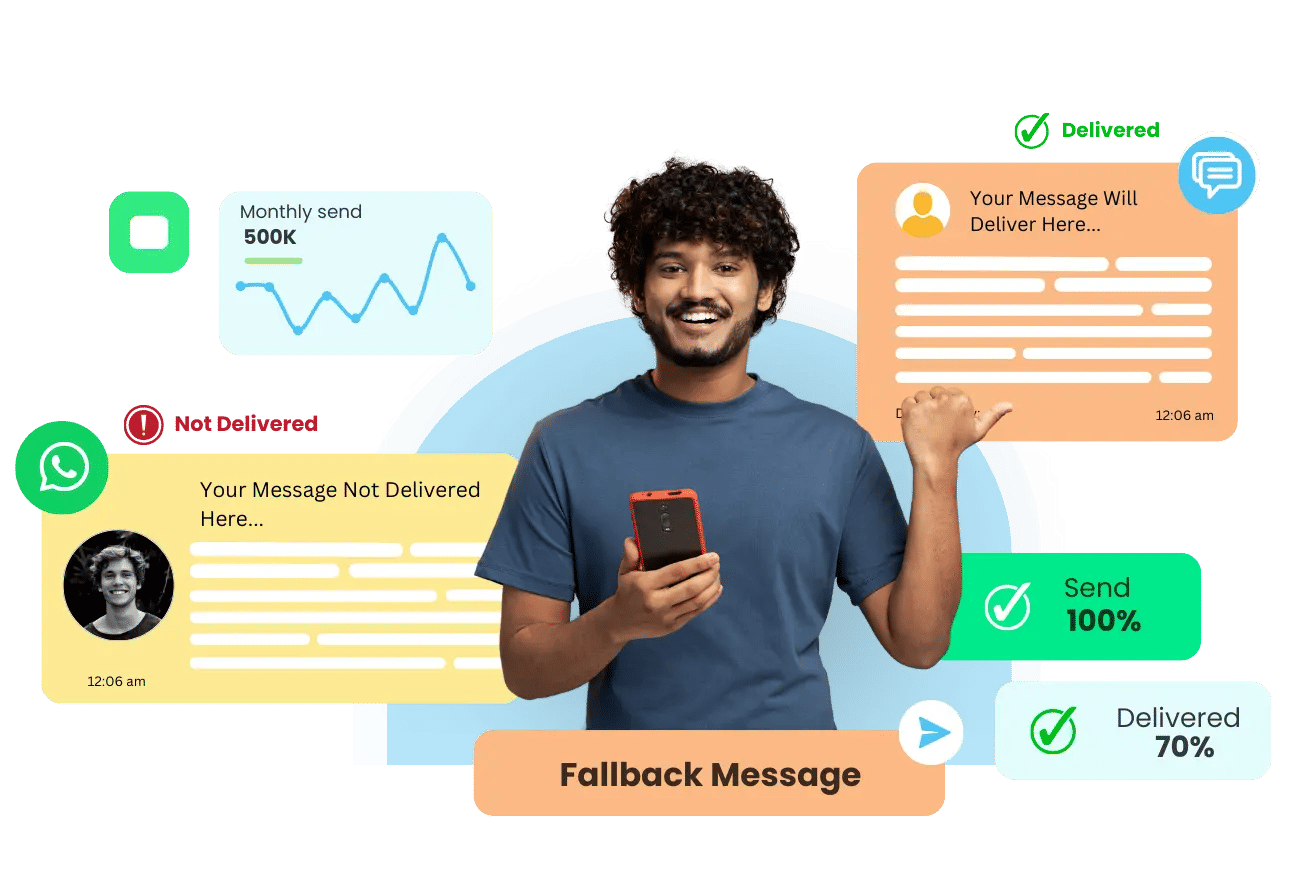
A SMS fallback system is a message delivery backup that activates automatically when your primary channel fails. In the context of WhatsApp Business API, it works like this: if a WhatsApp message isn't delivered within a defined window, the same message is resent via SMS to the same number.
The customer gets the message. The transaction completes. Your business keeps moving.
No manual intervention. No customer support ticket. No lost conversion.
This is what message reliability looks like in practice — not just hoping the first message lands, but building a system that guarantees it does.
2. How WhatsApp SMS Fallback Works with the API
The failed message retry mechanism is built into how the WhatsApp Business API handles delivery status. Here's the basic flow:
A message is triggered via the WhatsApp API (OTP, alert, confirmation)
The platform monitors delivery status in real time
If the message is not delivered within a set time (usually 30 to 60 seconds), the fallback triggers
The same message is sent via SMS to the recipient's number
Delivery is confirmed and logged
The entire process is automated. Businesses configure it once and the system handles every failed delivery from that point forward.
For high-volume senders, this isn't optional infrastructure. It's the baseline.
3. Where SMS Fallback Makes the Biggest Difference
OTP Fallback for Authentication and Transactions
The most critical use case is OTP fallback. One-time passwords are time-sensitive. A delay of even 30 seconds can break a login flow or payment confirmation. If WhatsApp delivery is slow or fails entirely, SMS catches it in time.
Every fintech, eCommerce checkout, and SaaS login flow that sends OTPs over WhatsApp should have an SMS fallback configured. The cost of a failed OTP is always higher than the cost of the fallback SMS.
Transactional Alerts and Notifications
Order confirmations, shipping updates, appointment reminders, and payment receipts all fall under notification fallback territory. These messages are expected by the customer. A missed notification creates unnecessary support load and reduces trust in the brand.
With a fallback in place, the message goes out on WhatsApp first. If it doesn't land, SMS delivers it. The customer stays informed either way.
4. The Business Case for 100% Message Delivery
Message delivery backup isn't just about avoiding failure. It's a measurable business advantage.
Fewer abandoned transactions because of missed OTPs
Lower customer support volume related to "I didn't get my code"
Higher trust in time-sensitive communications
Better delivery rate metrics across the board
For businesses running at scale, even a 1% improvement in delivery rate on transactional messages translates to thousands of successful interactions per month. The math on fallback infrastructure pays for itself quickly.
5. Ensure Every Message Gets Delivered with Anantya.ai
Anantya.ai's WhatsApp SMS fallback solution is built for businesses that can't afford delivery gaps. Configure your fallback rules, set your retry window, and let the system handle the rest. Whether it's OTPs, order alerts, or appointment reminders, your messages get through — on WhatsApp first, SMS as backup.
For more information kindly visit - https://anantya.ai/sms-fallback/
WhatsApp SMS Fallback: Never Miss a Critical Message AgainA customer reaches the checkout. They request an OTP. Nothing arrives. They wait. Refresh. Try again. The OTP never comes through on WhatsApp.They abandon the cart.That's not a messaging problem. That's a revenue problem. And it happens more often than most businesses realise.The fix isn't switching platforms. It's building a WhatsApp SMS fallback system that catches every failed message before the customer ever notices.1. What Is an SMS Fallback System?A SMS fallback system is a message delivery backup that activates automatically when your primary channel fails. In the context of WhatsApp Business API, it works like this: if a WhatsApp message isn't delivered within a defined window, the same message is resent via SMS to the same number.The customer gets the message. The transaction completes. Your business keeps moving.No manual intervention. No customer support ticket. No lost conversion.This is what message reliability looks like in practice — not just hoping the first message lands, but building a system that guarantees it does.2. How WhatsApp SMS Fallback Works with the APIThe failed message retry mechanism is built into how the WhatsApp Business API handles delivery status. Here's the basic flow:A message is triggered via the WhatsApp API (OTP, alert, confirmation)The platform monitors delivery status in real timeIf the message is not delivered within a set time (usually 30 to 60 seconds), the fallback triggersThe same message is sent via SMS to the recipient's numberDelivery is confirmed and loggedThe entire process is automated. Businesses configure it once and the system handles every failed delivery from that point forward.For high-volume senders, this isn't optional infrastructure. It's the baseline.3. Where SMS Fallback Makes the Biggest DifferenceOTP Fallback for Authentication and TransactionsThe most critical use case is OTP fallback. One-time passwords are time-sensitive. A delay of even 30 seconds can break a login flow or payment confirmation. If WhatsApp delivery is slow or fails entirely, SMS catches it in time.Every fintech, eCommerce checkout, and SaaS login flow that sends OTPs over WhatsApp should have an SMS fallback configured. The cost of a failed OTP is always higher than the cost of the fallback SMS.Transactional Alerts and NotificationsOrder confirmations, shipping updates, appointment reminders, and payment receipts all fall under notification fallback territory. These messages are expected by the customer. A missed notification creates unnecessary support load and reduces trust in the brand.With a fallback in place, the message goes out on WhatsApp first. If it doesn't land, SMS delivers it. The customer stays informed either way.4. The Business Case for 100% Message DeliveryMessage delivery backup isn't just about avoiding failure. It's a measurable business advantage.Fewer abandoned transactions because of missed OTPsLower customer support volume related to "I didn't get my code"Higher trust in time-sensitive communicationsBetter delivery rate metrics across the boardFor businesses running at scale, even a 1% improvement in delivery rate on transactional messages translates to thousands of successful interactions per month. The math on fallback infrastructure pays for itself quickly.5. Ensure Every Message Gets Delivered with Anantya.aiAnantya.ai's WhatsApp SMS fallback solution is built for businesses that can't afford delivery gaps. Configure your fallback rules, set your retry window, and let the system handle the rest. Whether it's OTPs, order alerts, or appointment reminders, your messages get through — on WhatsApp first, SMS as backup.For more information kindly visit - https://anantya.ai/sms-fallback/


 Arabic
 French
 Spanish
 Portuguese
 Deutsch
 Turkish
 Dutch
Dutch
 Italiano
 Russian
 Romaian
 Portuguese (Brazil)
 Greek
Greek