
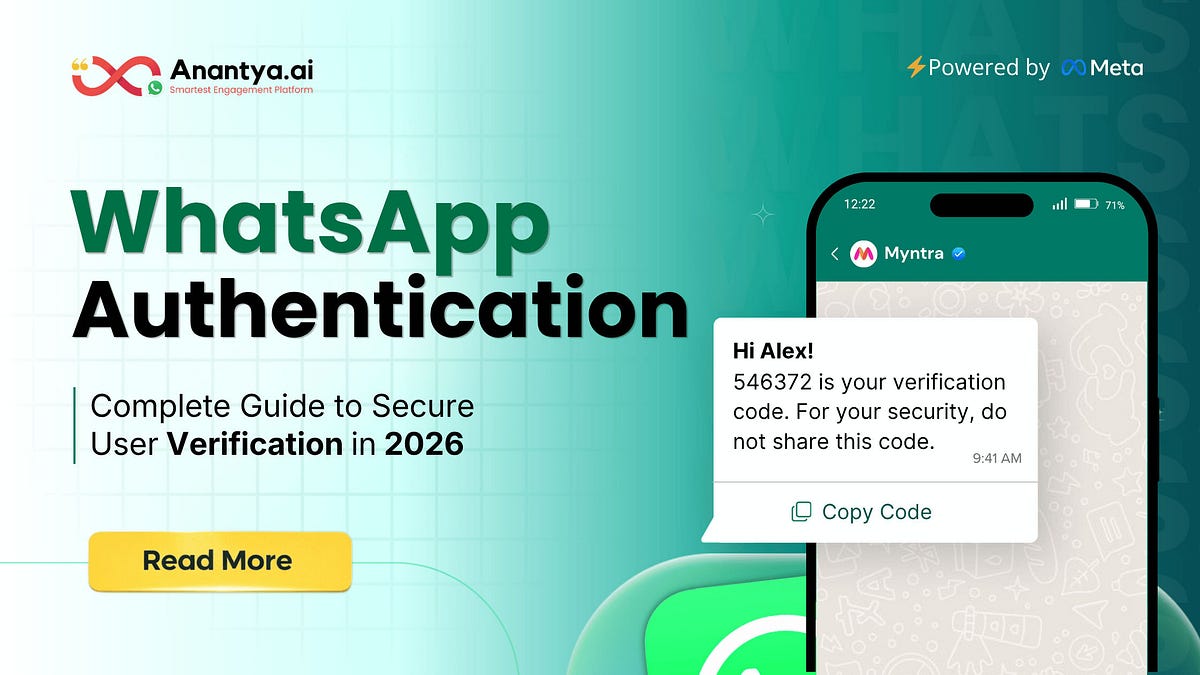
• WhatsApp Authentication: The 2026 Standard for User Verification


    Here's a number most founders never look at: how **** revenue quietly disappears every month because an OTP simply never arrived. Not a failed payment, not cart abandonment in the usual sense — just a boring, invisible delivery failure.


    A user signs up, enters their number, and waits. The SMS takes 40 seconds instead of 5, or it never shows up at all. They refresh, try again, maybe hit resend, and eventually just close the tab. On your dashboard, this doesn't register as "OTP failed." It shows up as "incomplete registration" — the real cause buried somewhere in the funnel.


    This is exactly why WhatsApp Authentication has moved from "nice-to-have" to something closer to a revenue protection strategy in 2026.


    What Is WhatsApp Authentication?

    At its core, WhatsApp Authentication is a way of verifying a user's identity by sending a one-time password (or similar verification prompt) through WhatsApp instead of traditional SMS. It runs on the WhatsApp Business API, which sends pre-approved, structured message templates directly to a user's WhatsApp number.


    This isn't limited to plain OTPs either. The same infrastructure powers login verification, transaction approvals, account recovery, two-factor authentication, and flagging logins from unfamiliar devices.


    How the Verification Flow Actually Works

    Users enter their phone number on a signup, login, or checkout screen.


    The backend calls the WhatsApp OTP API, usually through a Business Solution Provider (BSP), specifying the approved template and generating a time-bound code.


    A well-built system also includes an automatic SMS fallback: if the WhatsApp message doesn't deliver or isn't opened within a set window, the system quietly switches to SMS so no user gets stuck.


    Why Businesses Are Making the Switch

    A handful of numbers explain most of this shift. WhatsApp messages see open rates around 98%, compared to 85-90% for SMS and barely 25-30% for email. More importantly, they're typically opened within 90 seconds — which matters a lot when your OTP has a 10-minute expiry window.


    There's also a trust dimension that's easy to underestimate. A verified, branded WhatsApp message feels fundamentally different from an SMS sent from a random alphanumeric sender ID — something users have learned to be wary of. And because WhatsApp OTPs are tied to a device-level account rather than just a SIM card, they're harder to intercept through SIM-swap or SS7-style attacks, which meaningfully lowers fraud exposure compared to SMS.


    Summary

    This guide walked through what WhatsApp Authentication actually is, how the verification flow works end to end, and why delivery speed, open rates, and trust make it a meaningfully stronger option than SMS OTP for most businesses. We compared the two side by side, looked at where WhatsApp Authentication is already proving valuable — e-commerce, fintech, healthcare, EdTech, SaaS, travel, and logistics — and covered the common challenges (delivery failures, non-WhatsApp users, integration complexity, compliance) along with practical fixes for each.


    For more information kindly read the full blog - https://aaftabalfa.medium.com/whatsapp-authentication-the-2026-standard-for-user-verification-01e154ba8d0f?sharedUserId=aaftabalfa

    WhatsApp Authentication: The 2026 Standard for User Verification Here's a number most founders never look at: how **** revenue quietly disappears every month because an OTP simply never arrived. Not a failed payment, not cart abandonment in the usual sense — just a boring, invisible delivery failure. A user signs up, enters their number, and waits. The SMS takes 40 seconds instead of 5, or it never shows up at all. They refresh, try again, maybe hit resend, and eventually just close the tab. On your dashboard, this doesn't register as "OTP failed." It shows up as "incomplete registration" — the real cause buried somewhere in the funnel. This is exactly why WhatsApp Authentication has moved from "nice-to-have" to something closer to a revenue protection strategy in 2026. What Is WhatsApp Authentication?At its core, WhatsApp Authentication is a way of verifying a user's identity by sending a one-time password (or similar verification prompt) through WhatsApp instead of traditional SMS. It runs on the WhatsApp Business API, which sends pre-approved, structured message templates directly to a user's WhatsApp number. This isn't limited to plain OTPs either. The same infrastructure powers login verification, transaction approvals, account recovery, two-factor authentication, and flagging logins from unfamiliar devices. How the Verification Flow Actually WorksUsers enter their phone number on a signup, login, or checkout screen. The backend calls the WhatsApp OTP API, usually through a Business Solution Provider (BSP), specifying the approved template and generating a time-bound code. A well-built system also includes an automatic SMS fallback: if the WhatsApp message doesn't deliver or isn't opened within a set window, the system quietly switches to SMS so no user gets stuck. Why Businesses Are Making the SwitchA handful of numbers explain most of this shift. WhatsApp messages see open rates around 98%, compared to 85-90% for SMS and barely 25-30% for email. More importantly, they're typically opened within 90 seconds — which matters a lot when your OTP has a 10-minute expiry window. There's also a trust dimension that's easy to underestimate. A verified, branded WhatsApp message feels fundamentally different from an SMS sent from a random alphanumeric sender ID — something users have learned to be wary of. And because WhatsApp OTPs are tied to a device-level account rather than just a SIM card, they're harder to intercept through SIM-swap or SS7-style attacks, which meaningfully lowers fraud exposure compared to SMS. SummaryThis guide walked through what WhatsApp Authentication actually is, how the verification flow works end to end, and why delivery speed, open rates, and trust make it a meaningfully stronger option than SMS OTP for most businesses. We compared the two side by side, looked at where WhatsApp Authentication is already proving valuable — e-commerce, fintech, healthcare, EdTech, SaaS, travel, and logistics — and covered the common challenges (delivery failures, non-WhatsApp users, integration complexity, compliance) along with practical fixes for each. For more information kindly read the full blog - https://aaftabalfa.medium.com/whatsapp-authentication-the-2026-standard-for-user-verification-01e154ba8d0f?sharedUserId=aaftabalfa

    AAFTABALFA.MEDIUM.COM
    WhatsApp Authentication: The 2026 Standard for User Verification
    Here’s a number most founders never look at: how much revenue quietly disappears every month because an OTP simply never arrived. Not a…
    0 Kommentare 0 Geteilt 3KB Ansichten 0 Bewertungen
  • Stay Ahead of the Market with a Next-Generation HFT Trading Bot


    In today’s breakneck financial markets, every millisecond counts. Beleaf Technologies is excited to announce the launch of a new, next generation HFT Trading Bot, built for speed, accuracy and reliable operation. Built with advanced algorithmic architecture, our solution monitors multiple exchanges simultaneously, executes orders with ultra-low latency, and responds to changing market conditions in real time. Designed for hedge funds, proprietary trading firms, fintech start-up’s, and crypto enterprises, our platform helps transform market data into rapid, data-driven trading decisions. With comprehensive risk controls, scalable infrastructure, and seamless exchange integrations, the HFT Trading Bot empowers businesses to enhance operational efficiency, improve execution quality, and compete with confidence in dynamic markets. Partner with Beleaf Technologies to build a high-performance trading ecosystem designed for speed, reliability, and long-term growth.


    Ready to Build?>>
    https://www.beleaftechnologies.com/hft-trading-bot-development


    WhatsApp : +91 8056786622


    Reach us : https://www.beleaftechnologies.com/contact-us


    #HFTTradingBot, #AlgorithmicTrading, #FinTech, #TradingAutomation, #QuantTrading
    Stay Ahead of the Market with a Next-Generation HFT Trading Bot In today’s breakneck financial markets, every millisecond counts. Beleaf Technologies is excited to announce the launch of a new, next generation HFT Trading Bot, built for speed, accuracy and reliable operation. Built with advanced algorithmic architecture, our solution monitors multiple exchanges simultaneously, executes orders with ultra-low latency, and responds to changing market conditions in real time. Designed for hedge funds, proprietary trading firms, fintech start-up’s, and crypto enterprises, our platform helps transform market data into rapid, data-driven trading decisions. With comprehensive risk controls, scalable infrastructure, and seamless exchange integrations, the HFT Trading Bot empowers businesses to enhance operational efficiency, improve execution quality, and compete with confidence in dynamic markets. Partner with Beleaf Technologies to build a high-performance trading ecosystem designed for speed, reliability, and long-term growth. Ready to Build?>> https://www.beleaftechnologies.com/hft-trading-bot-development WhatsApp : +91 8056786622 Reach us : https://www.beleaftechnologies.com/contact-us #HFTTradingBot, #AlgorithmicTrading, #FinTech, #TradingAutomation, #QuantTrading
    0 Kommentare 0 Geteilt 3KB Ansichten 0 Bewertungen
  • PayPal Shares Jump on Reports of $53 Billion Buyout Proposal
    The report sparked strong investor interest, sending PayPal shares sharply higher as markets reacted to the possibility of one of the largest deals in the payments industry.
    Read for More Information :- https://thebusinessworldwide.com/paypal-shares-jump-on-reports-of-53-billion/
    #PayPal #SharesJump #BuyoutProposal #53Billion #InvestmentNews #FinTech #StockMarket #BusinessNews #CorporateAcquisition #TechStocks
    PayPal Shares Jump on Reports of $53 Billion Buyout Proposal The report sparked strong investor interest, sending PayPal shares sharply higher as markets reacted to the possibility of one of the largest deals in the payments industry. Read for More Information :- https://thebusinessworldwide.com/paypal-shares-jump-on-reports-of-53-billion/ #PayPal #SharesJump #BuyoutProposal #53Billion #InvestmentNews #FinTech #StockMarket #BusinessNews #CorporateAcquisition #TechStocks
    THEBUSINESSWORLDWIDE.COM
    PayPal Shares Jump on Reports of $53 Billion Buyout Proposal | CIO Times Magazine
    The report sparked strong investor interest, sending PayPal shares sharply higher as markets reacted to the possibility of one of the largest deals in the payments industry. read for more information
    0 Kommentare 0 Geteilt 3KB Ansichten 0 Bewertungen
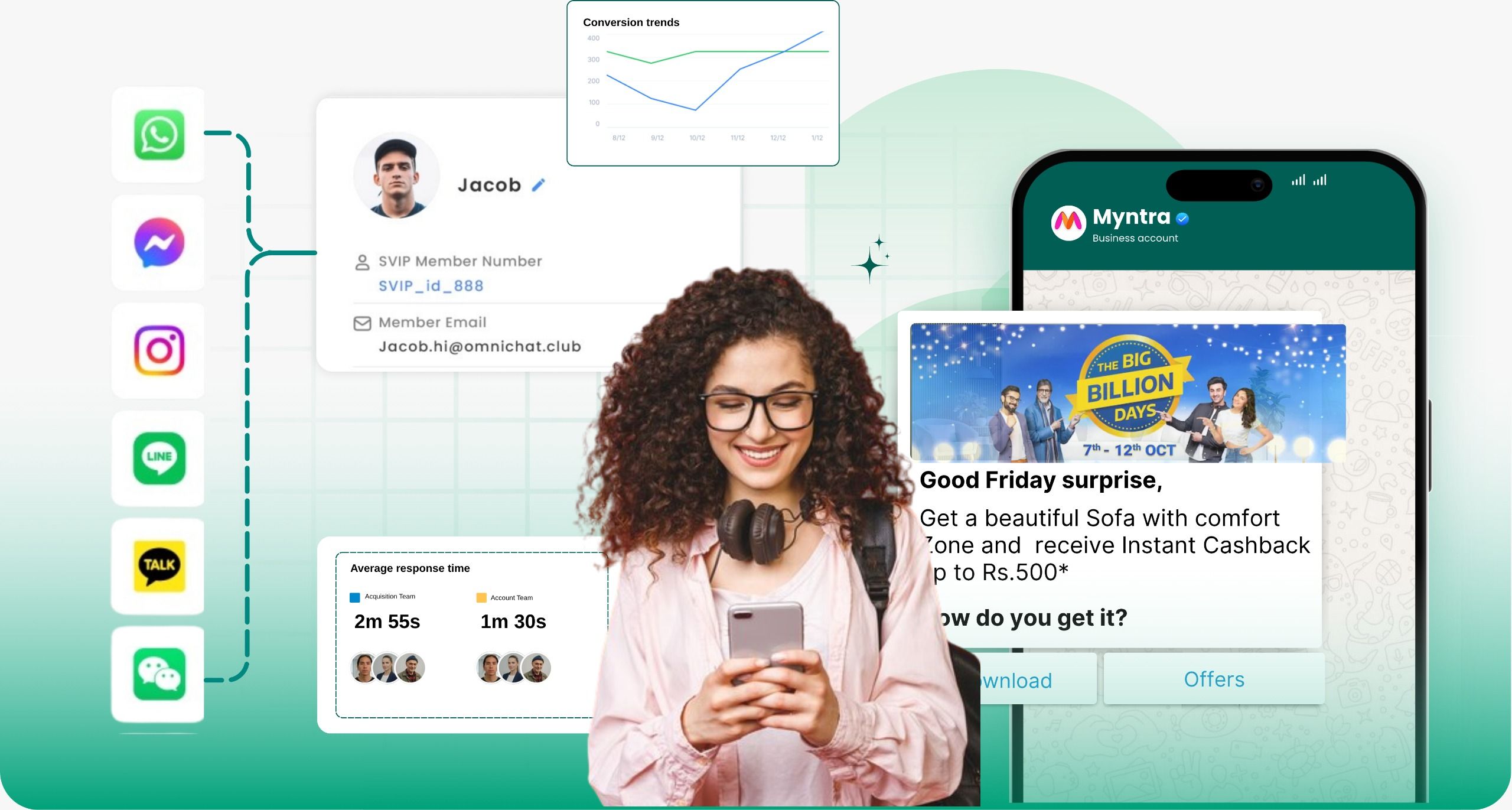
  • Why Banks Are Quietly Moving Customer Conversations to WhatsApp


    Most people don't think about banking until something needs their attention.


    Their salary gets credited. A debit card is blocked after unusual activity. A KYC document expires. A loan application moves to the next stage.


    For years, banks relied on SMS, emails, phone calls, and mobile applications to communicate these updates. Those channels still matter, but customer habits have changed. People ignore promotional emails, silence unknown calls, and often swipe away app notifications without reading them. Yet there is one app they continue to open multiple times every day, almost without thinking.


    That app is WhatsApp.


    For banks, NBFCs, insurance providers, and fintech companies, this shift is less about following a technology trend and more about meeting customers where they already are. Instead of asking people to check another portal or download another app, financial institutions are bringing routine conversations into a familiar space.


    This is what WhatsApp banking looks like today. It is not about replacing internet banking or mobile banking. It is about making everyday communication simpler, faster, and easier to act on.


    Banking Has Always Been About Communication


    People often associate banks with transactions, loans, investments, and regulations. But beneath all of these services lies one constant need: communication.


    A customer wants to know whether their loan application has been approved. A borrower wants a reminder before an EMI is due. Someone opening a new account wants to understand which documents are still missing. Another customer may simply want confirmation that a payment has been completed successfully.


    When these messages arrive late, or not at all, frustration grows quickly.


    Good banking communication is not about sending more notifications. It is about sending the right information at the right time through a channel people actually pay attention to.


    That is why many financial institutions have started treating WhatsApp as a communication channel rather than just a messaging app.


    What WhatsApp Banking Actually Means


    The phrase WhatsApp banking can be misleading because it does not mean customers perform every banking activity inside WhatsApp.


    Instead, it refers to the use of WhatsApp to support communication between financial institutions and their customers.


    These conversations can include:


    Account notifications
    Transaction confirmations
    Loan updates
    Credit card statements
    Insurance reminders
    Customer support
    Document requests
    Payment alerts
    Service updates


    The actual banking systems continue to operate in the background. WhatsApp simply becomes the interface through which customers receive information and interact with the institution.


    Think of it as the difference between visiting a bank branch to ask a question and receiving the same answer instantly through a secure conversation.


    The service remains the same. The experience becomes more convenient.


    Why Traditional Banking Messages Are Losing Attention


    For decades, SMS was the default communication channel for banks.


    It worked because customers received very few messages each day.


    Today, the average smartphone receives notifications from shopping apps, food delivery services, social media platforms, streaming subscriptions, travel companies, and dozens of other businesses. Important banking messages often compete with hundreds of other notifications.


    Email faces a similar challenge.


    Many customers check their personal inbox only occasionally, while promotional emails make it difficult for important financial messages to stand out.


    For more information kindly visit - https://anantya.ai/

    Why Banks Are Quietly Moving Customer Conversations to WhatsApp Most people don't think about banking until something needs their attention. Their salary gets credited. A debit card is blocked after unusual activity. A KYC document expires. A loan application moves to the next stage. For years, banks relied on SMS, emails, phone calls, and mobile applications to communicate these updates. Those channels still matter, but customer habits have changed. People ignore promotional emails, silence unknown calls, and often swipe away app notifications without reading them. Yet there is one app they continue to open multiple times every day, almost without thinking. That app is WhatsApp. For banks, NBFCs, insurance providers, and fintech companies, this shift is less about following a technology trend and more about meeting customers where they already are. Instead of asking people to check another portal or download another app, financial institutions are bringing routine conversations into a familiar space. This is what WhatsApp banking looks like today. It is not about replacing internet banking or mobile banking. It is about making everyday communication simpler, faster, and easier to act on. Banking Has Always Been About Communication People often associate banks with transactions, loans, investments, and regulations. But beneath all of these services lies one constant need: communication. A customer wants to know whether their loan application has been approved. A borrower wants a reminder before an EMI is due. Someone opening a new account wants to understand which documents are still missing. Another customer may simply want confirmation that a payment has been completed successfully. When these messages arrive late, or not at all, frustration grows quickly. Good banking communication is not about sending more notifications. It is about sending the right information at the right time through a channel people actually pay attention to. That is why many financial institutions have started treating WhatsApp as a communication channel rather than just a messaging app. What WhatsApp Banking Actually Means The phrase WhatsApp banking can be misleading because it does not mean customers perform every banking activity inside WhatsApp. Instead, it refers to the use of WhatsApp to support communication between financial institutions and their customers. These conversations can include: Account notifications Transaction confirmations Loan updates Credit card statements Insurance reminders Customer support Document requests Payment alerts Service updates The actual banking systems continue to operate in the background. WhatsApp simply becomes the interface through which customers receive information and interact with the institution. Think of it as the difference between visiting a bank branch to ask a question and receiving the same answer instantly through a secure conversation. The service remains the same. The experience becomes more convenient. Why Traditional Banking Messages Are Losing Attention For decades, SMS was the default communication channel for banks. It worked because customers received very few messages each day. Today, the average smartphone receives notifications from shopping apps, food delivery services, social media platforms, streaming subscriptions, travel companies, and dozens of other businesses. Important banking messages often compete with hundreds of other notifications. Email faces a similar challenge. Many customers check their personal inbox only occasionally, while promotional emails make it difficult for important financial messages to stand out. For more information kindly visit - https://anantya.ai/
    ANANTYA.AI
    Conversational Engagement Platform for Businesses | Anantya.ai
    Anantya.ai is a conversational engagement platform for managing WhatsApp, RCS, SMS, Voice, Marketing, and Support in one place.
    0 Kommentare 0 Geteilt 2KB Ansichten 0 Bewertungen
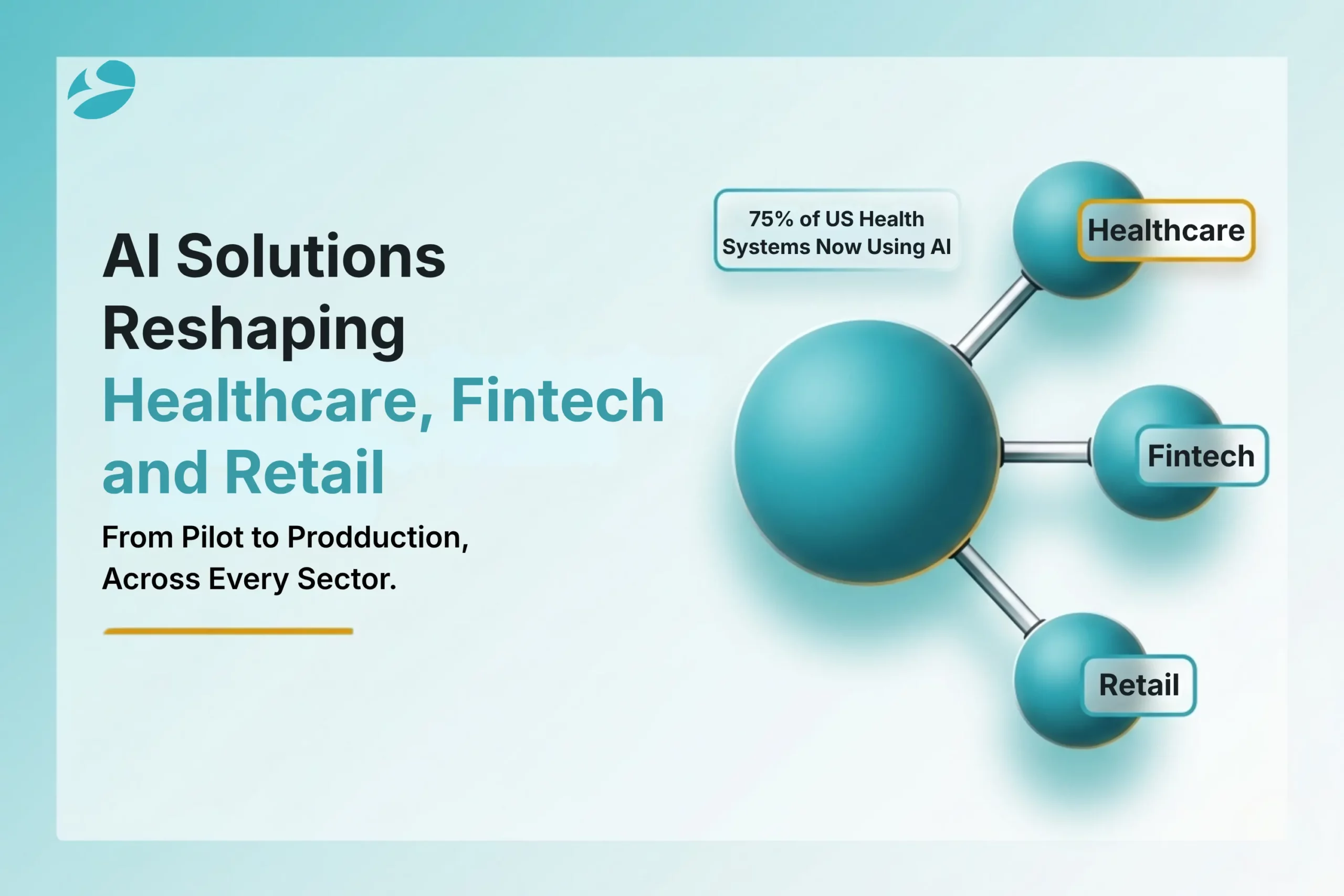
  • How AI Development Solutions Are Reshaping Healthcare, Fintech, and Retail
    Read more:- https://www.biztechcs.com/blog/how-ai-development-solutions-reshaping-healthcare-fintech-retail/


    #AIdevelopmentservices #AIsolutions #Artificialintelligence #AItransformation
    How AI Development Solutions Are Reshaping Healthcare, Fintech, and Retail Read more:- https://www.biztechcs.com/blog/how-ai-development-solutions-reshaping-healthcare-fintech-retail/ #AIdevelopmentservices #AIsolutions #Artificialintelligence #AItransformation
    WWW.BIZTECHCS.COM
    How AI Development Solutions Are Reshaping Healthcare, Fintech, and Retail
    A practical industry guide to AI development solutions in healthcare, fintech, and retail — real use cases, verified deployment outcomes, success factors, and how to evaluate an AI development partner.
    0 Kommentare 0 Geteilt 1KB Ansichten 0 Bewertungen
  • How AI Development Solutions Are Reshaping Healthcare, Fintech, and Retail
    Read more:- https://www.biztechcs.com/blog/how-ai-development-solutions-reshaping-healthcare-fintech-retail/


    #AIdevelopmentservices #AIsolutions #Artificialintelligence #AItransformation
    How AI Development Solutions Are Reshaping Healthcare, Fintech, and Retail Read more:- https://www.biztechcs.com/blog/how-ai-development-solutions-reshaping-healthcare-fintech-retail/ #AIdevelopmentservices #AIsolutions #Artificialintelligence #AItransformation
    WWW.BIZTECHCS.COM
    How AI Development Solutions Are Reshaping Healthcare, Fintech, and Retail
    A practical industry guide to AI development solutions in healthcare, fintech, and retail — real use cases, verified deployment outcomes, success factors, and how to evaluate an AI development partner.
    0 Kommentare 0 Geteilt 1KB Ansichten 0 Bewertungen
  • Troniex Technologies specializes in developing secure, scalable, and AI-powered HFT trading bot solutions tailored to the needs of fintech startups, crypto exchanges, proprietary trading firms, and enterprise trading businesses.


    Visit: https://www.troniextechnologies.com/blog/hft-trading-bot-development
    Troniex Technologies specializes in developing secure, scalable, and AI-powered HFT trading bot solutions tailored to the needs of fintech startups, crypto exchanges, proprietary trading firms, and enterprise trading businesses. Visit: https://www.troniextechnologies.com/blog/hft-trading-bot-development
    0 Kommentare 0 Geteilt 747 Ansichten 0 Bewertungen
Gesponsert